Memory Care Naples
Support designed around dementia-related needs
Memory care is a type of supportive setting designed around the needs of people living with Alzheimer’s disease or another form of dementia. Memory-related changes may affect orientation, judgment, communication, routines, medication safety, or navigating familiar spaces.
Bear Country Living describes memory-care support with care and humility. We do not frame memory care as a cure or promise that symptoms will stop. A consistent routine, familiar cues, supervision, meaningful engagement, and family communication are important topics for assessment. Call to confirm current memory-care scope, admission criteria, and availability—tours are welcome.
When might memory care be needed?
Memory care may be worth exploring when memory changes affect safety, medication, meals, hygiene, sleep, orientation, or the ability to be alone—or when a caregiver is exhausted or supervision has become constant.
- Missed medications, unsafe cooking, or empty refrigerator
- Nighttime wakefulness or increased confusion
- Difficulty dressing or personal care without prompting
- Repeated attempts to leave home or distress in familiar surroundings
- Weight change, falls, or isolation that worry the family
These signs do not make a placement decision by themselves. Involve a healthcare professional and discuss the situation with Bear Country Living.
Questions families commonly bring
Families often ask whether a person with Alzheimer’s can be accepted, how wandering concerns are approached, how nighttime needs are handled, whether meals and medication are supervised, and what happens when behavior or health needs change. There is no universal answer—the right response is a direct conversation about the current situation.
A useful call can cover diagnosis, mobility, communication, sleep pattern, personal-care needs, medication list, history of leaving home, triggers, and interests. We explain what can be supported and when a higher level of clinical or secured care may be needed.
A calm, smaller environment
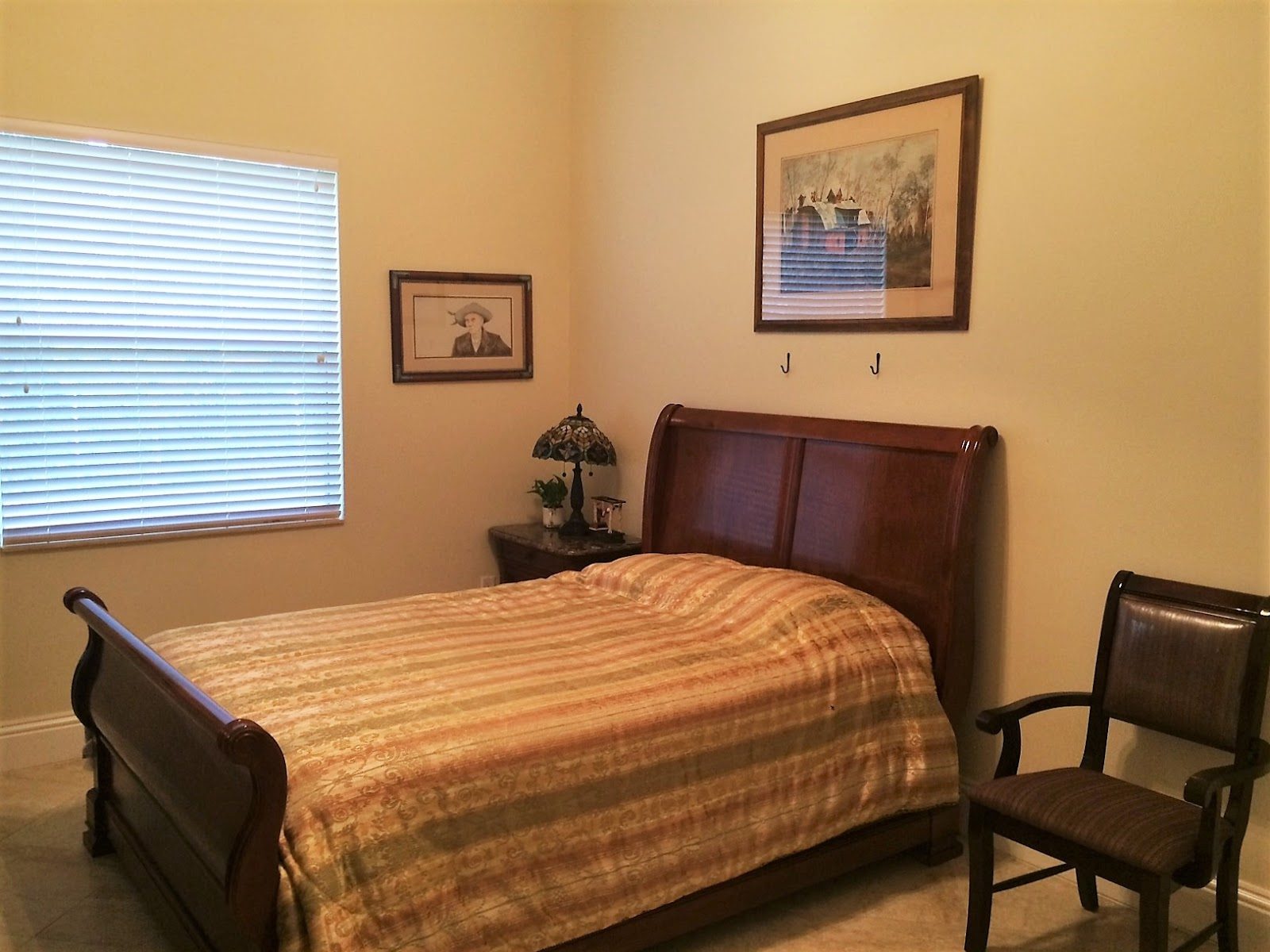
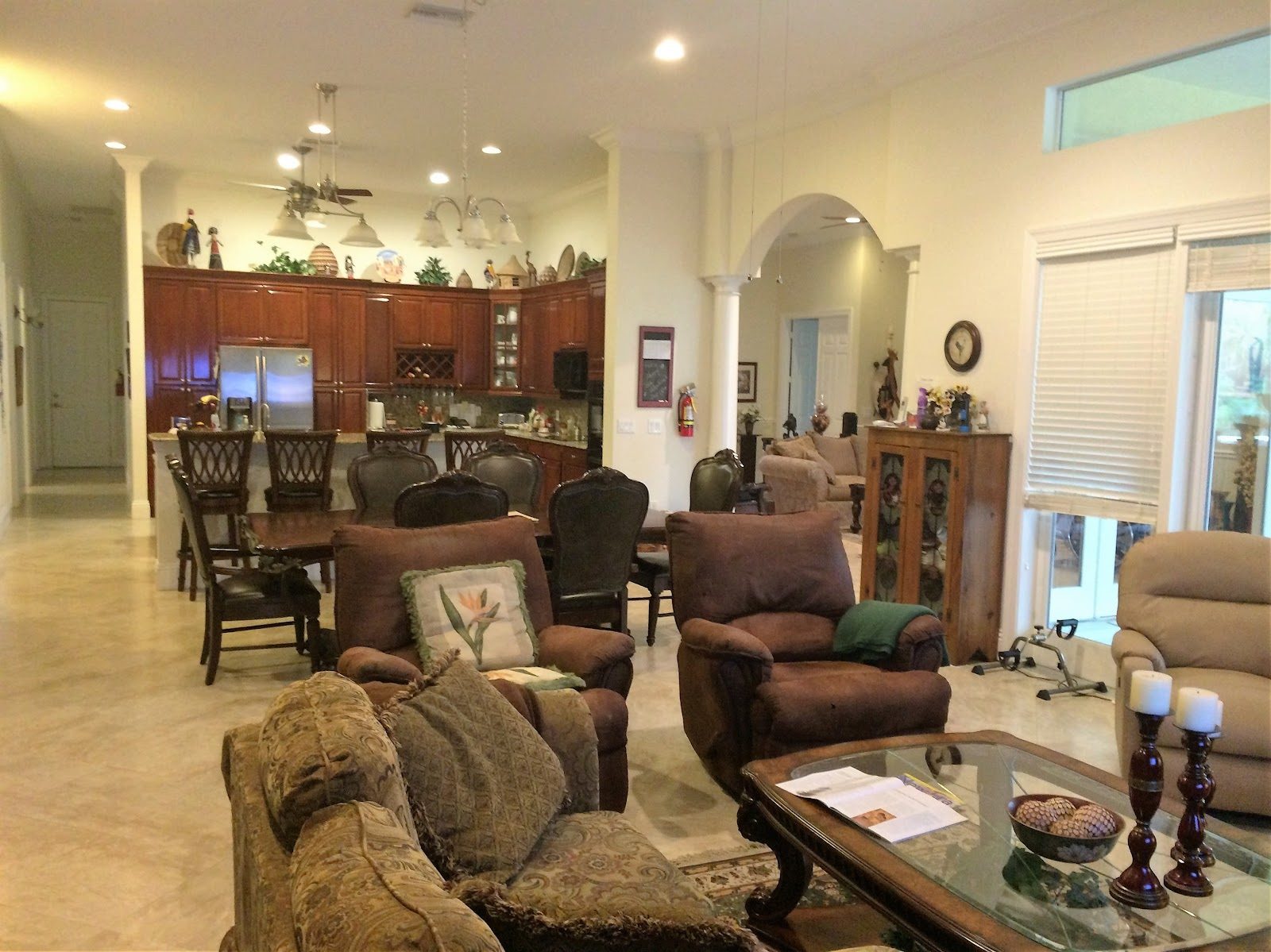
Some families prefer a smaller residential environment because it may feel easier to navigate. Ask how staff learn preferences, how transitions are introduced, how visitors are welcomed, and how the home responds when a person is anxious. Compare scale, layout, daily rhythm, and noise level on your tour.
Use person-first language with us: “a person living with dementia,” not a label that reduces someone to a diagnosis.
Ask about memory-care support
Call (239) 467-6054 to discuss current admission criteria, care scope, and a visit.